18 Jul 2026
Exploring Color Coding Systems in Poker Chip Sets and Their Applications in Blind Structure Management for Varying Game Formats
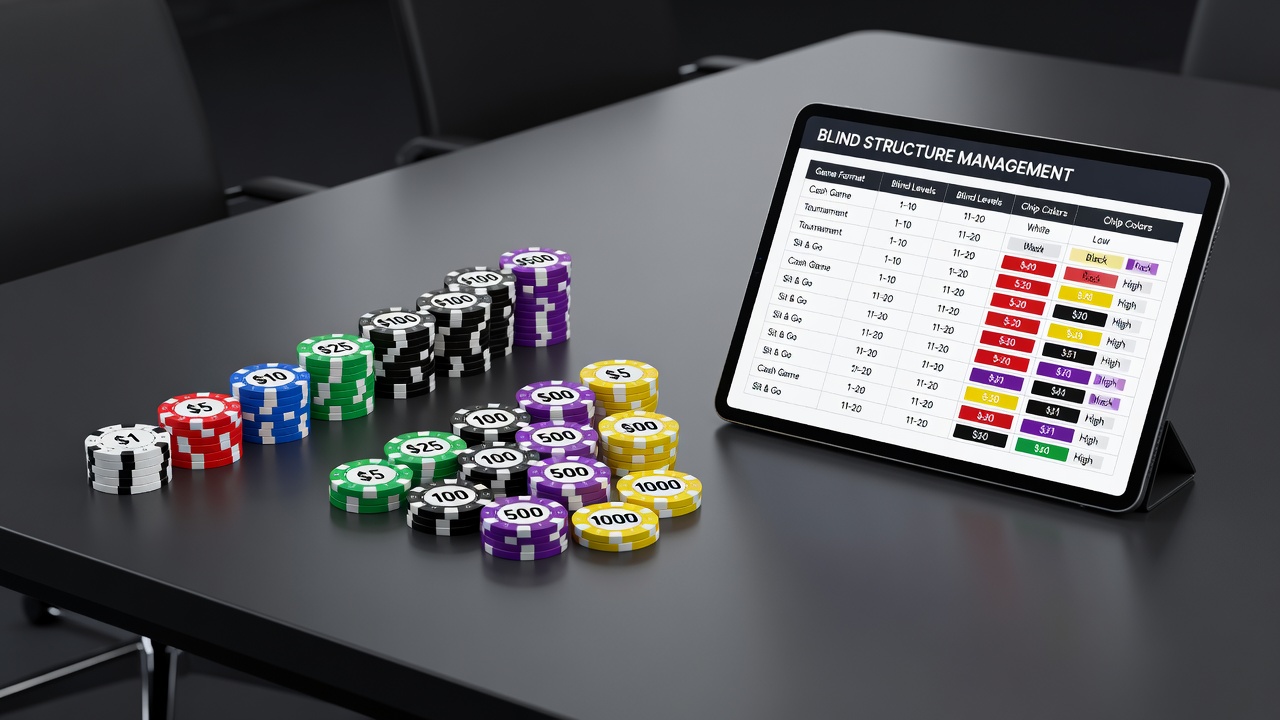
Color coding systems in poker chip sets assign specific hues to chip denominations, creating visual shorthand that streamlines gameplay and supports precise blind structure adjustments in both tournaments and cash games. Observers note that these systems emerged from casino practices in the mid-20th century and have since standardized across professional and recreational environments. Data from gaming equipment suppliers indicates that common colors include white for the lowest values, red for mid-range, and black or blue for higher stakes, though regional manufacturers introduce slight variations while maintaining core recognition patterns.
Standardized Color Assignments Across Chip Sets
Manufacturers typically follow established palettes where white chips represent 1 unit, red denotes 5, green signals 25, black indicates 100, and purple or yellow mark 500 and above. Research from equipment testing labs shows that these assignments reduce errors during rapid chip movements, especially when players and dealers handle stacks under time pressure. In July 2026, several major series adopted uniform sets that align with these conventions to maintain consistency across multiple venues.
Yet variations appear in custom or regional productions, where orange might substitute for 1,000 units or gray for 25. Those who study supply chain records find that North American producers favor bolder contrasts compared to European lines, which often incorporate metallic accents for higher denominations. This differentiation helps tournament staff verify authenticity quickly during blind increases.
Blind Structure Management Through Visual Identification
Blind structures rely on incremental raises that demand accurate chip valuation at each stage, and color coding enables dealers and players to confirm amounts without constant verbal checks. Figures from tournament operation reports reveal that color-based systems cut verification time by approximately 30 percent in high-volume events. Tournament directors apply these systems when scaling blinds for formats ranging from no-limit hold'em to pot-limit omaha, where stack depths and betting patterns shift rapidly.
Take one major circuit event where organizers adjusted blind levels every 20 minutes; staff used distinct chip colors to track antes separately from blinds, preventing mix-ups that could disrupt payout structures. The approach proves especially useful in mixed-game rotations, where participants switch between variants and need immediate clarity on denomination values.

Applications in Tournament Versus Cash Game Settings
Tournaments employ escalating blind schedules that require chips to reflect growing pot sizes, and color coding supports smooth transitions between levels by allowing rapid stack counts. According to records maintained by the Nevada Gaming Control Board, venues hosting large fields standardize sets to handle 10,000-plus participants without denomination confusion. Cash games, by contrast, maintain fixed blinds for extended sessions, so chip colors serve more for quick buy-in verification and change-making at the table.
What's interesting is how rebuys and add-ons in tournaments leverage the same colors to match initial stacks precisely, whereas cash game players often request specific color mixes for personal tracking preferences. Industry analyses from the Canadian Gaming Association indicate that hybrid events blending both formats increasingly rely on modular chip sets that accommodate either structure through simple color reallocation.
Adaptations for Different Poker Variants and Player Volumes
Formats such as short-deck hold'em or big-o demand adjusted blind structures that color coding accommodates by highlighting premium denominations early. Observers note that seven-card stud games historically used additional chip colors for antes, a practice that persists in some mixed tournaments today. Larger player counts at final tables prompt organizers to introduce higher-value colors sooner in the schedule, maintaining pace without excessive chip handling.
One documented case from a 2026 series in Asia showed that incorporating yellow 5,000 chips reduced table clutter during late stages, where blinds reached six figures. Data collected across multiple sites suggests that consistent coding across variants improves dealer training efficiency and lowers dispute rates during all-in confrontations.
Implementation Considerations for Equipment Suppliers and Venues
Suppliers design chip sets with UV markings and edge spots that complement color coding, ensuring durability under frequent use in varying climates. Research compiled by the European Betting and Gaming Association highlights how standardized palettes integrate with digital tracking systems used in modern tournaments. Venues in July 2026 continued to refine these combinations when preparing for expanded schedules that include both traditional and emerging poker variants.
Those managing accessory inventories find that color-coded sets pair effectively with automated counters, further streamlining blind announcements and level changes. This integration supports formats that alternate between fast and slow structures within the same event.
Conclusion
Color coding systems in poker chip sets provide a foundational mechanism for managing blind structures across diverse game formats, from cash games with static levels to tournaments featuring rapid escalations. Evidence gathered from regulatory bodies and equipment studies demonstrates consistent application patterns that enhance operational flow and accuracy. As series evolve through 2026 and beyond, these visual standards continue to underpin reliable gameplay in professional and recreational settings alike.