22 Jun 2026
How Regional Climate Conditions Shape Longevity in Poker Table Surfaces and Related Equipment
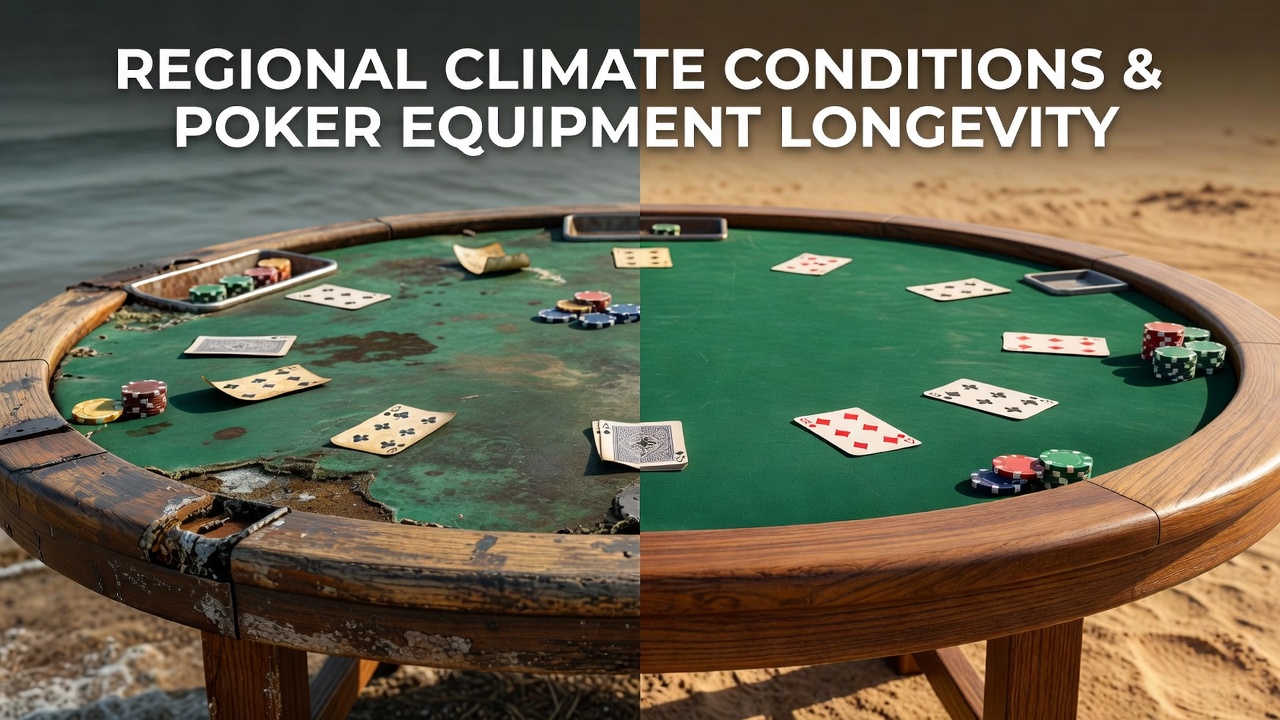
Regional climate patterns exert measurable influence on the durability of poker table surfaces and accompanying equipment such as mats, dice sets, and chip storage units. Humidity levels, temperature fluctuations, and seasonal precipitation combine to accelerate or decelerate material degradation in ways that tournament organizers and equipment suppliers track through maintenance logs and replacement cycles.
Humidity Effects on Felt and Speed Cloth Performance
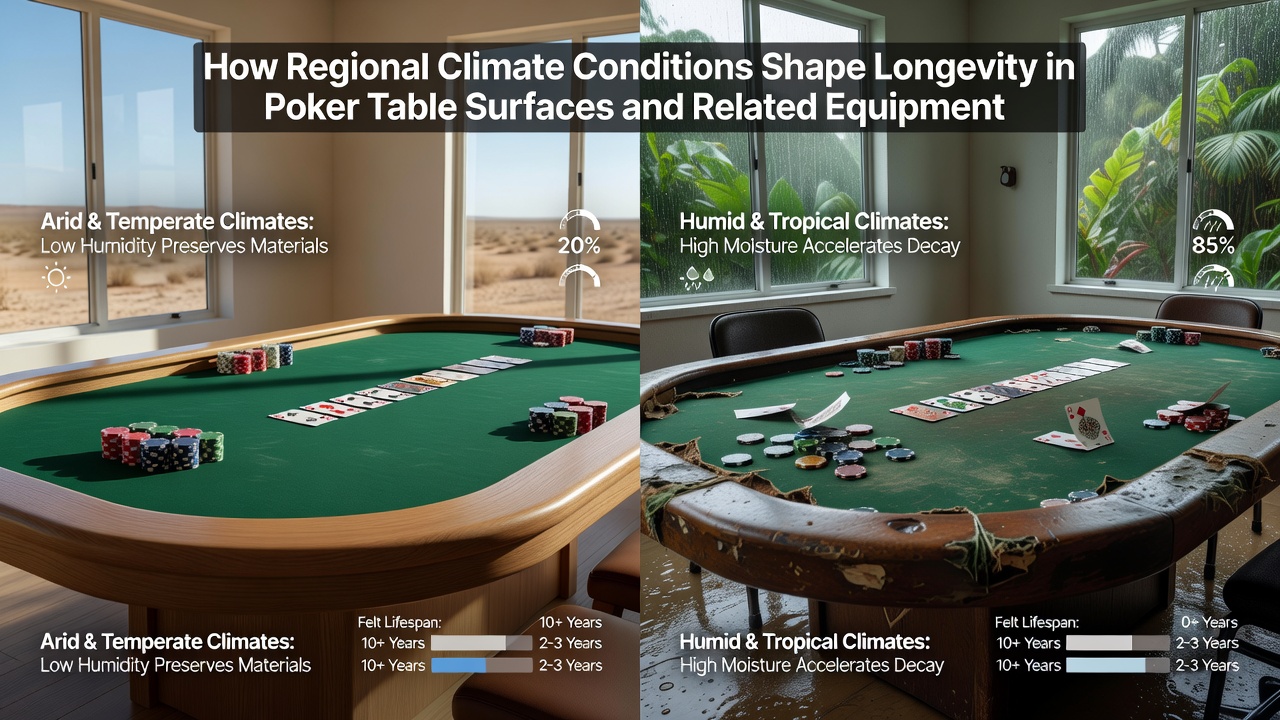
High humidity environments cause felt fibers to absorb moisture which leads to stretching, warping, and eventual fiber breakdown over repeated use. Manufacturers record that tables installed in coastal zones experience up to 30 percent faster surface wear compared with those maintained in controlled indoor settings, because constant exposure to elevated moisture content weakens adhesive bonds holding the fabric to the underlying substrate. Speed cloth, engineered with tighter weaves and synthetic blends, resists initial absorption yet still shows pilling and edge fraying when relative humidity remains above 70 percent for extended periods.
Dry climates produce the opposite stress. Low moisture content draws natural oils from felt surfaces and creates static buildup that attracts dust particles. Over months these particles embed into the fabric and create abrasive zones that shorten the effective playing life of both traditional felt and performance speed cloth.
Temperature Variations and Material Stability
Extreme temperature swings affect not only table surfaces but also the dimensional stability of related components. Dice molded from cellulose acetate expand and contract with daily cycles, which alters roll characteristics if storage areas lack climate regulation. Chip cases constructed from polycarbonate develop micro-fractures when moved between air-conditioned tournament halls and outdoor loading zones during summer months. Data collected by equipment distributors indicates that facilities located in desert regions report higher rates of accessory replacement during peak temperature months.
Regional Case Observations
Facilities in Southeast Asia document that monsoon season humidity spikes require weekly surface inspections, whereas operators in the southwestern United States focus on dust mitigation protocols during dry wind events. European venues situated near the Mediterranean maintain dehumidification systems that extend felt lifespan by limiting moisture retention during mild winters. Canadian prairie tournaments note that winter heating systems create localized dryness zones that necessitate additional felt conditioning treatments before major events.
Equipment Pairing and Climate Interactions
Shufflers and mats experience accelerated component fatigue when paired with surfaces that have already absorbed regional moisture. Automated card shufflers operating in high-humidity zones encounter increased friction on feed rollers, while mats placed beneath tables in arid locations develop surface cracking that transfers to dice contact points. Studies conducted by gaming equipment research groups show that integrated kits last longer when storage protocols account for local dew point trends rather than relying on generic manufacturer guidelines.
June 2026 tournament schedules in multiple regions will test updated climate-adaptive maintenance schedules. Venues in Australia and the southwestern United States have begun logging surface temperature and humidity readings at the start of each session to correlate equipment performance with environmental variables. Preliminary figures reveal that tables rotated through climate-controlled staging areas demonstrate measurably lower replacement frequency than stationary installations.
Standards and Monitoring Practices
Industry organizations such as the National Oceanic and Atmospheric Administration supply regional climate datasets that equipment managers consult when planning surface replacements. Australian operators reference long-term records from the Bureau of Meteorology to anticipate felt stress periods during El Niño cycles. These datasets allow facilities to schedule deep cleaning or full resurfacing before visible degradation appears during high-volume events.
Maintenance crews now incorporate portable hygrometers and infrared thermometers into routine checks. Readings taken at table level provide early indicators of conditions that accelerate adhesive failure or fabric stretching. Facilities that integrate these measurements into digital logs report more predictable equipment budgets across multi-year tournament cycles.
Conclusion
Climate-driven wear patterns on poker table surfaces and related equipment follow predictable regional trends that maintenance teams address through targeted environmental controls. Data from multiple geographic zones demonstrates that humidity and temperature management directly influence replacement intervals for felt, speed cloth, dice, and accessory components. Facilities that align upkeep schedules with local climate records achieve more consistent equipment performance during extended tournament operations.