29 Jun 2026
The Historical Progression of Poker Chip Materials and Their Pairing with Modern Shuffler Technology
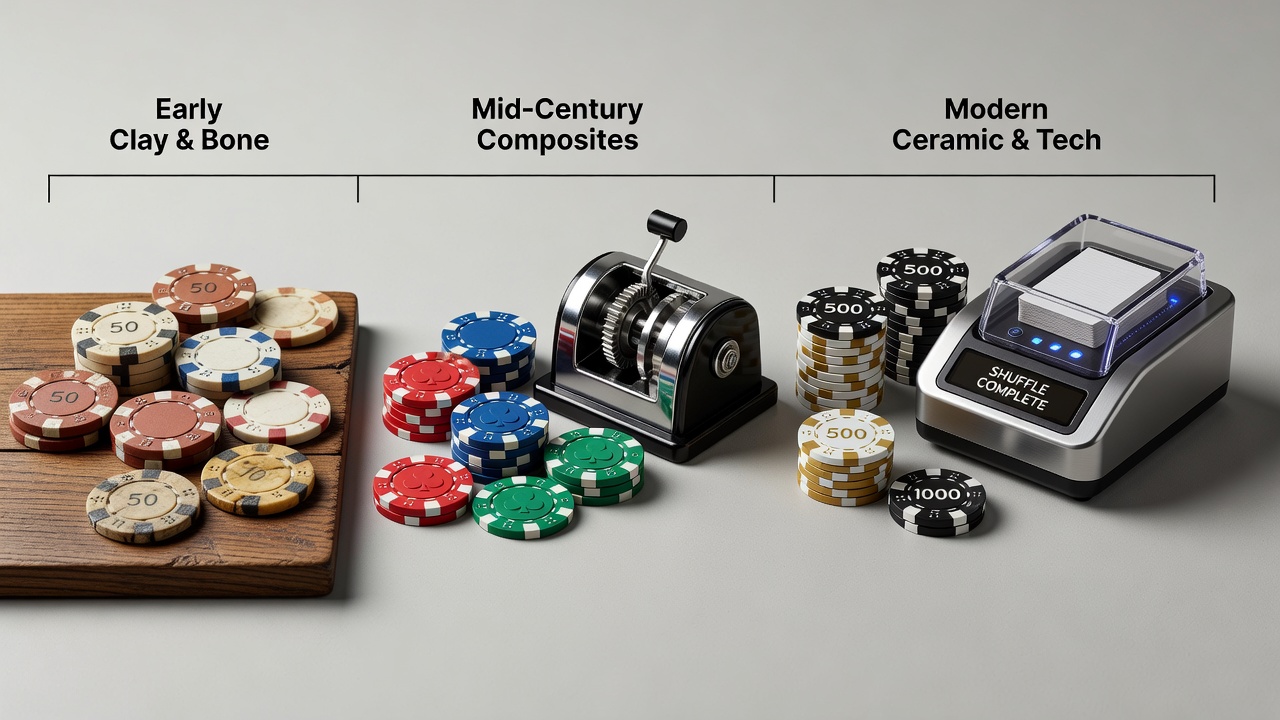
Early poker chip production relied on materials like bone, ivory, and basic clay composites that operators shaped by hand during teh late nineteenth century, yet these substances wore down quickly under constant handling and offered limited consistency across large sets. Manufacturers soon transitioned toward more durable clay and plastic blends by the 1920s, which allowed for standardized weights and colors that casinos adopted to streamline table operations while reducing counterfeiting risks in high-volume environments.
Data from regulatory filings shows that clay-based chips dominated American gaming floors through the mid-twentieth century because their density provided reliable stacking and handling characteristics, whereas plastic alternatives gained traction after World War II when supply chains expanded and production costs dropped. Those who study gaming equipment note that the shift coincided with increased table traffic, prompting facilities to seek materials that resisted chipping and maintained appearance over thousands of uses.
Material Innovations Through the Decades
By the 1970s ceramic composites entered production lines and delivered smoother edges plus greater resistance to wear, which paired effectively with emerging automated systems that required precise physical dimensions for sorting and verification processes. Research conducted by industry groups indicates ceramic chips maintained structural integrity longer than earlier clay versions, reducing replacement cycles in busy card rooms where daily volume exceeded several thousand hands.
Modern facilities now incorporate RFID-enabled chips that embed microchips within composite shells, allowing real-time tracking during play and integration with inventory systems that update automatically after each session. Such advancements emerged prominently in the 1990s when electronic monitoring became feasible, and data from casino operations reveals these chips cut loss rates by measurable margins compared with non-tagged predecessors.
Integration With Automated Card Handling Systems
Contemporary shuffler units operate alongside chip materials that feature consistent diameters and minimal surface friction, ensuring table layouts remain stable while cards move through mechanical feeders without interference from nearby stacks. Observers note that facilities select chip weights and textures specifically to avoid vibrations that could affect sensor calibration in nearby shuffling mechanisms, particularly in setups where multiple tables share central processing units.
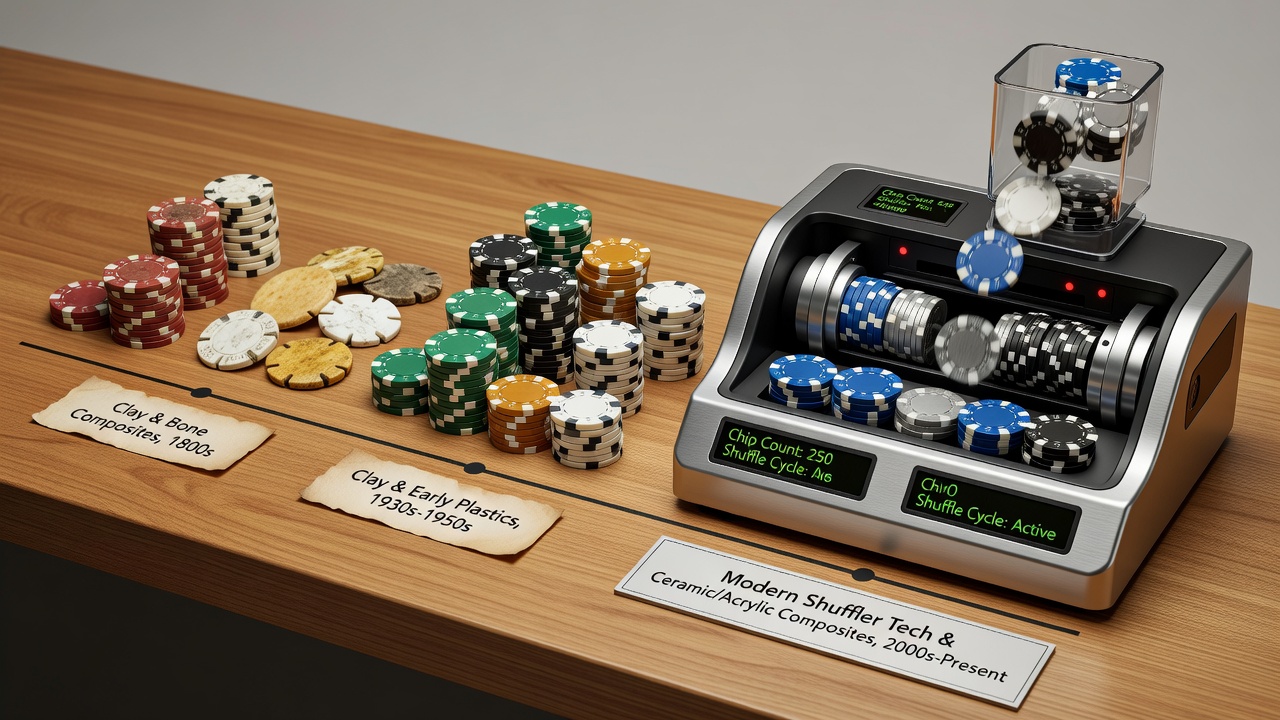
Equipment specifications published by manufacturers detail how chip compositions influence overall workflow, since heavier ceramic or composite varieties resist displacement during rapid card distribution cycles that occur in tournaments. In June 2026 several major venues reported updated pairing protocols that matched newly minted RFID chip batches with next-generation shufflers calibrated for faster cycle times, resulting in documented reductions in downtime between rounds.
Regulatory bodies such as the Nevada Gaming Control Board have outlined material standards that ensure compatibility between physical gaming pieces and electronic verification tools, while studies from the American Gaming Association highlight how these guidelines support consistent performance across integrated table systems. Facilities in multiple regions apply similar criteria when upgrading equipment, aligning chip density profiles with shuffler sensor tolerances to maintain accuracy during extended sessions.
Regional Manufacturing and Compatibility Standards
Production standards vary by region yet converge on requirements for uniform weight distribution and low magnetic interference, which protects the function of optical readers inside modern shuffling devices. Canadian regulatory frameworks, for instance, emphasize testing protocols that simulate high-traffic conditions to verify that chip surfaces do not generate static that disrupts card alignment mechanisms.
Those who manage large-scale operations often coordinate chip orders with shuffler maintenance schedules, since material hardness directly affects how stacks settle on felt surfaces adjacent to automated feeders. Reports from European gaming authorities show comparable approaches where composite chip formulations undergo evaluation for thermal stability, ensuring performance remains steady when rooms operate at varying temperatures throughout multi-day events.
Conclusion
The progression of poker chip materials from basic clay to RFID-integrated composites reflects ongoing adaptation to automated card handling technologies that define current tournament and cash game environments. Facilities continue to refine pairings based on empirical performance data, supporting smoother operations across diverse regulatory landscapes.