6 Jun 2026
The Interplay of Regional Manufacturing Standards Across Poker Chips, Mats, and Accessory Lines
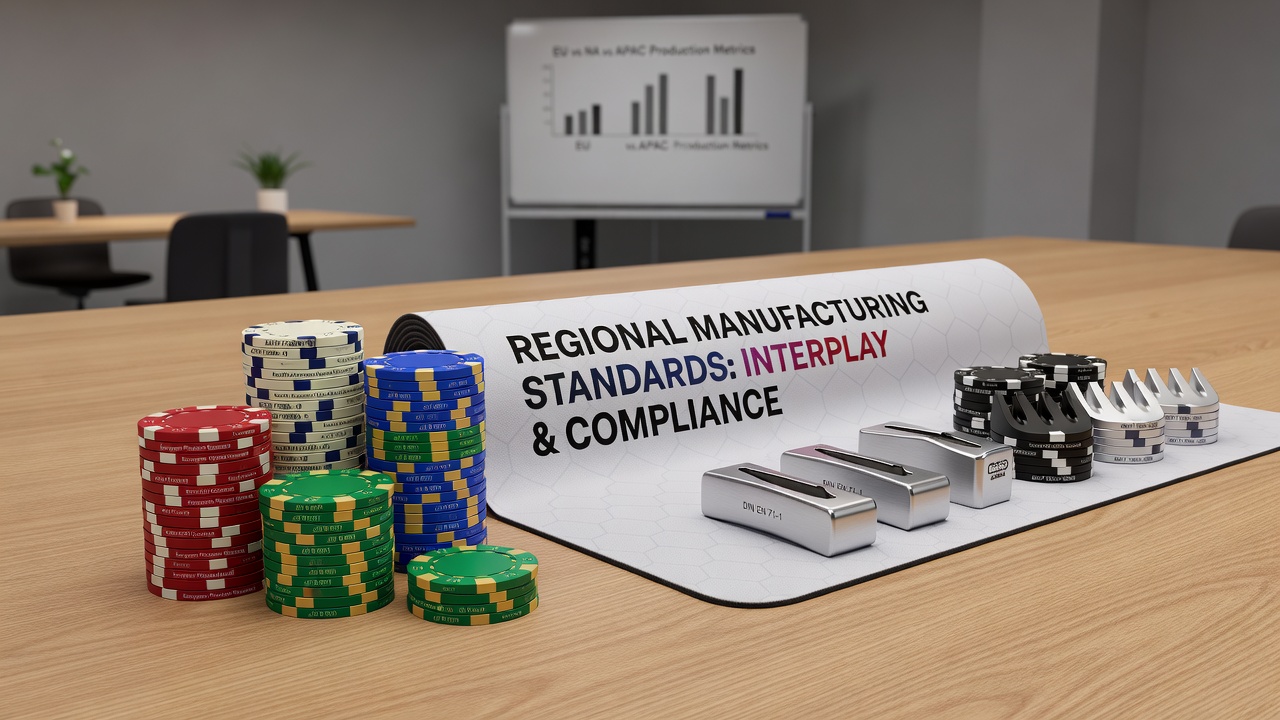 Manufacturing standards for poker chips, mats, and accessory lines reflect distinct regional approaches that influence material selection, dimensional tolerances, and performance testing. North American producers often adhere to guidelines established by state gaming authorities, while European and Asian manufacturers follow frameworks set by international trade agreements and local environmental regulations. These differences create compatibility considerations for tournament organizers and equipment suppliers operating across borders. Regional requirements shape the composition of poker chips in measurable ways. Clay composite chips produced in the United States typically undergo compression molding processes that meet specifications for weight consistency and edge design, whereas plastic injection-molded chips from Southeast Asian facilities prioritize high-volume output under ISO quality management systems. Data from industry reports indicate that weight tolerances in North American standards range between plus or minus 0.5 grams, compared with slightly broader allowances in some Asian production zones. Table mats and speed cloth surfaces follow separate but related standards. Felt materials sourced from European textile mills must satisfy flammability and dye-stability tests outlined by EU textile directives, while synthetic speed cloth manufactured in North America undergoes friction coefficient evaluations to ensure consistent card movement. Observers note that these surface standards directly affect how dealers handle cards when paired with regionally produced chips, particularly in mixed-equipment environments. Accessory lines such as chip cases, dealer buttons, and cut cards encounter overlapping standards because they integrate with both chips and mats. Case manufacturers in Canada align with packaging durability tests from federal consumer product guidelines, ensuring secure stacking during transport. Those who coordinate international shipments report that dimensional mismatches between chip diameters and case inserts occur more frequently when suppliers mix components certified under different regional protocols.
Material and Process Variations by Region
Production techniques diverge based on available raw materials and regulatory priorities. In the United States, suppliers source specialized polymers that resist wear under repeated handling, while facilities in China incorporate recycled plastics where permitted by local environmental rules. June 2026 industry updates from the Asian Gaming and Entertainment Expo highlighted new traceability requirements for polymer batches used in accessory components, aiming to standardize documentation across export markets.
European regulations emphasize chemical safety in dyes and coatings applied to both chips and mats. REACH compliance documentation must accompany shipments entering EU member states, creating additional verification steps for North American and Asian exporters. This documentation process affects lead times for custom orders that combine chips with matching mats and storage accessories.
Compatibility Challenges in Global Supply Chains
Equipment distributors face practical issues when assembling sets from multiple regions. A chip case certified under one set of dimensional standards may not accommodate chips produced under another, forcing additional quality checks at receiving facilities. Research conducted by gaming equipment testing laboratories shows that friction variations between regionally produced mats and chips can alter shuffle dynamics during extended play sessions.
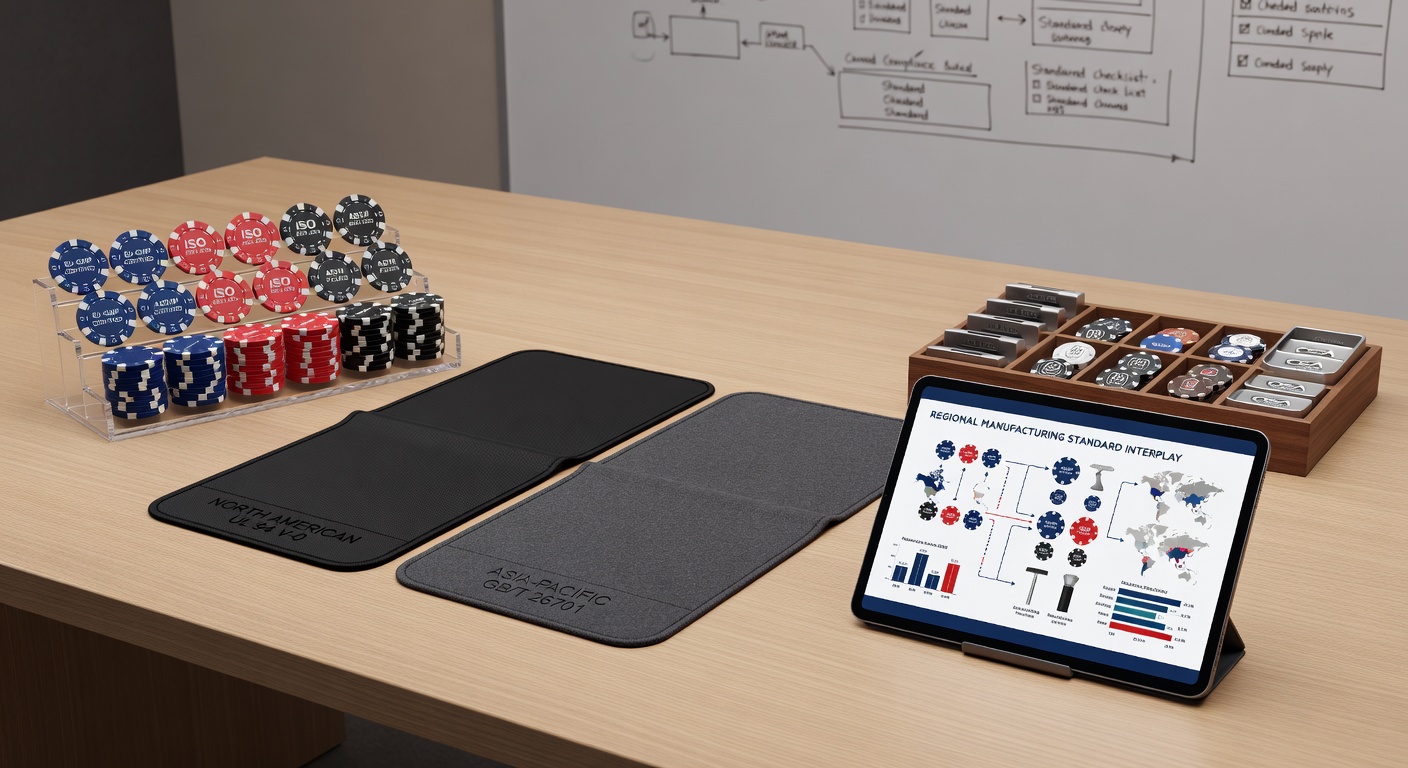
Industry organizations such as the American Gaming Association publish guidance on equipment interoperability that tournament directors reference when sourcing mixed-origin products. Similar resources from the Canadian Gaming Association address cross-border equipment movement, helping operators anticipate certification gaps before events begin.
Testing Protocols and Certification Requirements
Testing protocols differ in emphasis and frequency. North American laboratories focus on drop-impact resistance for chips and tear-strength measurements for mats, whereas facilities following Australian standards incorporate additional UV exposure tests for outdoor or brightly lit venues. Accessory items like cut cards undergo edge-smoothness evaluations to prevent unintended card marking during use.
Certification bodies maintain databases that suppliers consult when verifying component compatibility. These records track serial numbers and material batches, allowing traceability when performance issues arise in the field. Tournament staff who manage large-scale events in 2026 increasingly request multi-region certification summaries to streamline setup procedures.
Future Standardization Trends
Collaborative efforts among international gaming associations seek to reduce friction points in equipment specifications. Working groups formed in early 2026 examined common measurement methods for chip diameter and mat surface friction, with pilot programs scheduled for select regional events later that year. Such initiatives aim to maintain regional manufacturing flexibility while improving cross-compatibility for global operators.
Conclusion
Regional manufacturing standards continue to shape how poker chips, mats, and accessory lines are produced and combined. Differences in material tolerances, testing methods, and documentation requirements create both challenges and opportunities for suppliers navigating international markets. As coordination between regulatory bodies increases, equipment compatibility across regions shows measurable improvement, supporting consistent play experiences wherever events occur.