30 May 2026
The Technical Specifications Behind Professional Card Shufflers Used in High-Volume Gaming Environments
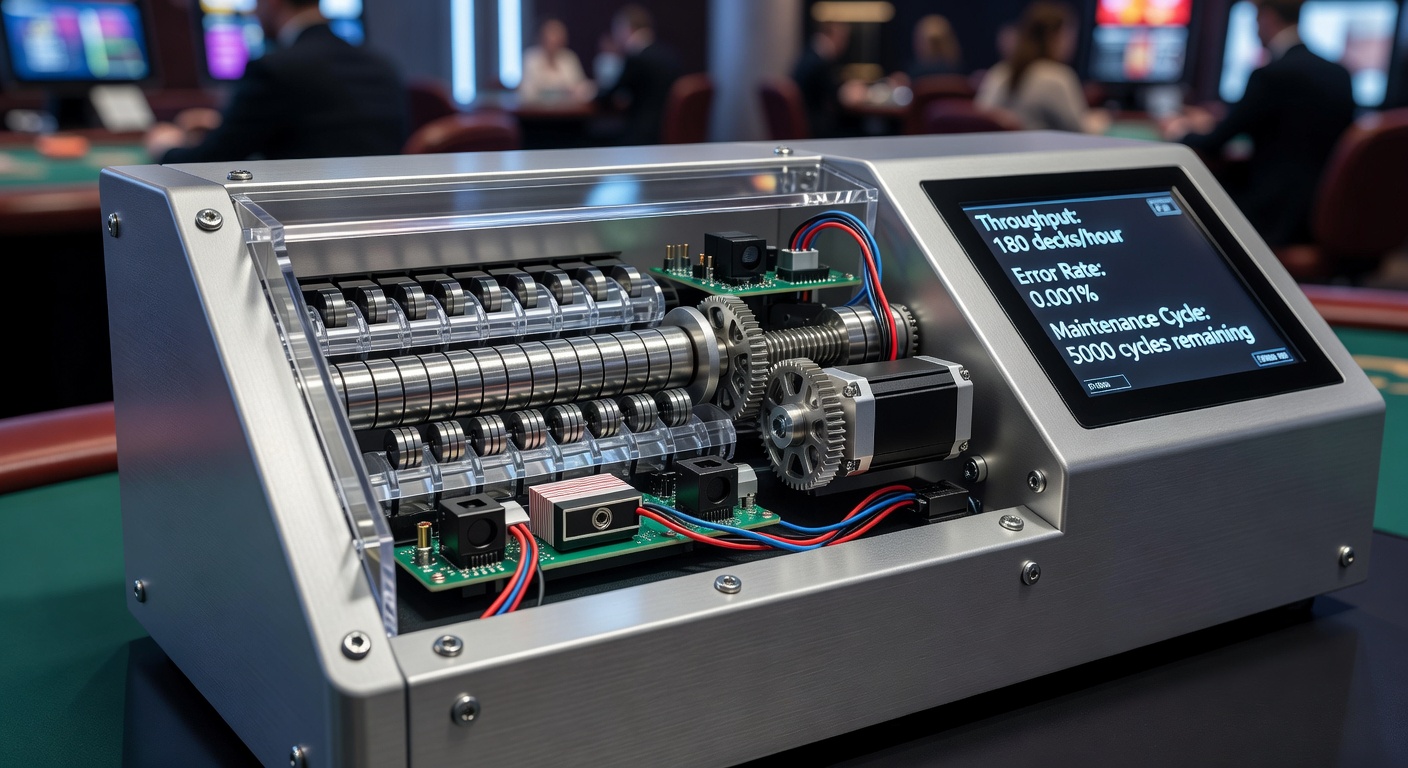
Professional card shufflers in high-volume gaming environments operate with precise engineering to handle thousands of decks daily while maintaining randomization standards required by regulatory bodies, and these machines integrate mechanical, electronic, and software components that distinguish them from consumer models. Data from manufacturers shows that commercial units process between 300 and 500 cards per minute depending on the model, which allows table games to resume quickly after each hand.
Core Mechanical Systems and Motor Specifications
Manufacturers design these shufflers around dual or multi-compartment mechanisms that separate decks into smaller packets before recombining them through a series of rollers and elevators, and this approach reduces predictable patterns compared to single-pass systems. Motors typically run on 24-volt DC power supplies with torque ratings between 0.5 and 1.2 Newton-meters, which provides enough force to handle standard 52-card decks plus jokers without jamming while keeping noise levels under 55 decibels during operation.
Precision sensors monitor card thickness at tolerances of 0.05 millimeters, and they detect irregularities such as bent edges or foreign objects that could disrupt the shuffle cycle. In facilities preparing for peak activity periods like those scheduled for May 2026, maintenance logs reveal that these sensors trigger automatic stops in over 98 percent of detected anomalies before cards reach the output tray.
Randomization Algorithms and Security Features
Software embedded in professional shufflers employs cryptographically secure pseudo-random number generators certified to standards such as those outlined by the Nevada Gaming Control Board, which requires statistical testing across millions of simulated shuffles to verify uniformity. Each cycle generates a unique seed value derived from hardware entropy sources including thermal noise and timing variations, and this process ensures that repeat sequences remain statistically improbable even after extended use.
Many models incorporate RFID readers that scan embedded tags in playing cards, allowing the system to verify deck integrity and log every card movement for audit purposes. Access controls rely on encrypted PIN entry or biometric scanners, while audit trails capture timestamps, operator IDs, and cycle counts that regulators can review during inspections.
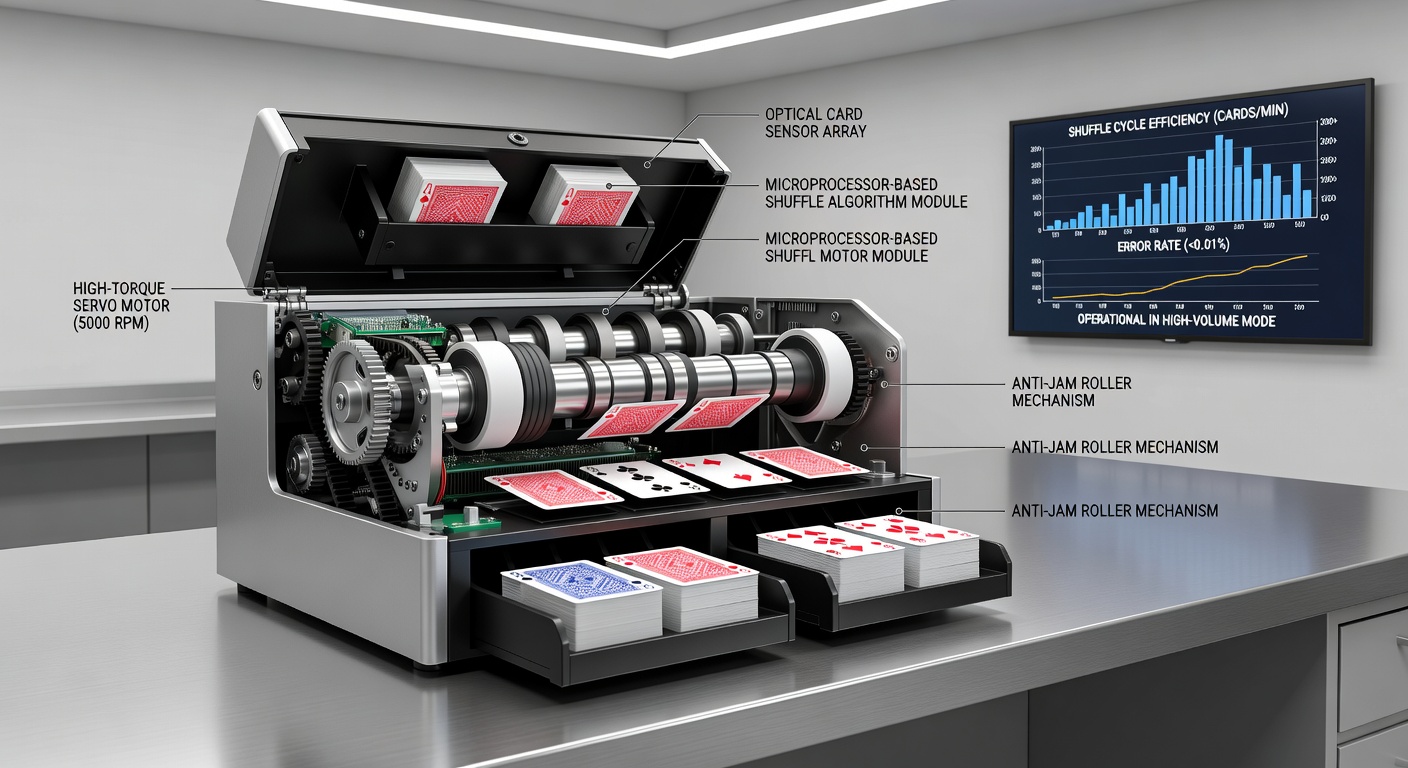
Continuous shuffle technology appears in some high-volume installations where cards return directly to the machine after each round, and these units maintain a reservoir of up to eight decks that rotate through the mechanism without full removal. Throughput data indicates that such systems support game speeds exceeding 60 hands per hour at busy tables while preserving the required randomness thresholds.
Power Consumption, Durability, and Integration Standards
Power draw for continuous-duty models averages between 40 and 75 watts during active shuffling, with standby modes dropping consumption below 10 watts to support 24-hour casino operations. Enclosures use reinforced polymers or aluminum alloys rated for impact resistance and chemical exposure from cleaning agents, and internal components undergo accelerated life testing equivalent to five years of daily use before commercial release.
Connectivity options include Ethernet ports and wireless modules that interface wth table management software, enabling real-time monitoring of shuffle counts and error rates across multiple floors. Industry reports from the Canadian Gaming Association note that integrated systems have reduced manual intervention by approximately 40 percent in monitored properties since their wider adoption.
Calibration routines run automatically at programmed intervals, adjusting roller pressure and sensor sensitivity based on accumulated usage data, while firmware updates delivered through secure channels address identified vulnerabilities without requiring physical removal from the gaming floor.
Regulatory Testing and Performance Metrics
Independent laboratories subject shufflers to extensive evaluation protocols that measure randomization quality through chi-square tests and serial correlation analysis, and machines must pass these evaluations before receiving approval for use in licensed venues. Failure rates recorded during certification rarely exceed 0.1 percent for mechanical faults across 10,000 consecutive cycles according to aggregated industry figures.
Deck capacity varies by model, with some units accommodating up to six standard decks simultaneously while others focus on single-deck precision for games requiring frequent verification. Temperature operating ranges span 10 to 40 degrees Celsius with humidity tolerances up to 80 percent non-condensing, which accommodates diverse gaming environments from climate-controlled halls to temporary tournament setups.
Conclusion
Technical specifications for professional card shufflers reflect a balance of speed, security, and reliability that supports continuous operation in demanding settings, and ongoing refinements in sensor technology and software validation continue to align these devices with evolving regulatory expectations. Facilities track performance metrics closely to maintain compliance and operational efficiency throughout the year.