18 Jun 2026
Tracing Supply Chain Variations in Felt Mat Production and Their Effects on Dice Roll Consistency Within Integrated Poker Kits
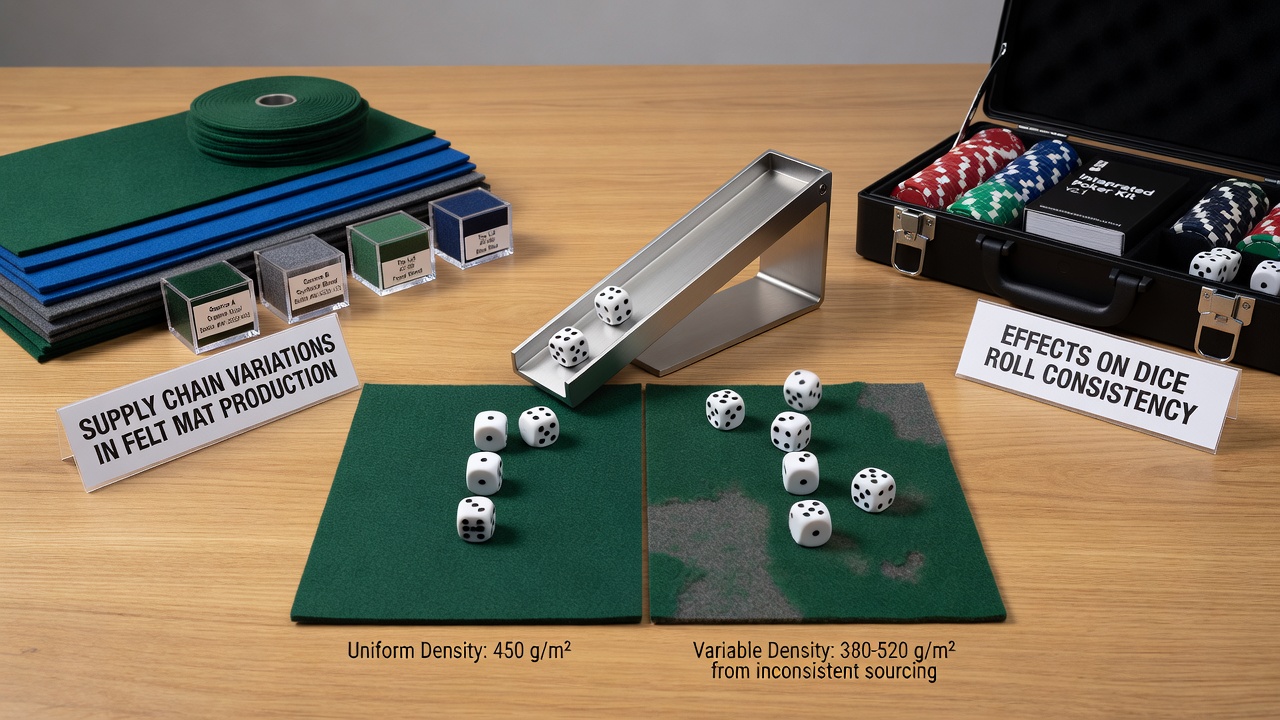
Supply chain differences in felt mat manufacturing start with raw material sourcing and extend through regional processing methods that alter final surface properties, which in turn influence how dice interact with the fabric during rolls in combined poker and dice kits. Manufacturers obtain wool fibers primarily from Australia and New Zealand while synthetic polyester blends often originate from facilities in China and Vietnam, and each origin brings distinct fiber lengths plus moisture retention levels that affect mat density after weaving. These upstream choices determine friction coefficients once the felt reaches assembly lines for integrated gaming products.
Regional Material Sourcing Patterns
Textile suppliers in different hemispheres apply varying scouring and carding techniques that change fiber alignment before felting occurs. Australian wool undergoes mechanical sorting that preserves longer staples, whereas Asian processors frequently blend shorter recycled polyester strands to meet volume targets. Data from international trade records show that mats produced with higher wool content retain tighter surface naps, which reduce dice bounce variance compared to those incorporating greater synthetic portions. Observers note that shipment delays or tariff shifts in 2025 prompted some kit assemblers to switch suppliers mid-year, resulting in detectable lot-to-lot differences in mat thickness ranging from 1.8 to 2.4 millimeters.
Manufacturing Process Divergences
Needle-punching versus woven construction represents another key variable tracked across production sites. European plants tend to favor hydraulic pressing that compresses fibers uniformly, while Southeast Asian lines often rely on thermal bonding that creates micro-variations in pile height. These methods produce measurable differences in surface resilience when dice strike the mat at typical velocities of 1.5 to 3 meters per second. Research indicates that even a 0.2 millimeter deviation in nap depth alters the energy transfer during impact, shifting outcome distribution patterns in repeated roll tests conducted under controlled laboratory conditions.
Measured Effects on Dice Behavior
Integrated poker kits that bundle dice with felt mats expose players to these production inconsistencies because the same surface serves both card dealing and dice rolling functions. Laboratory trials performed by equipment testing facilities reveal that mats sourced through longer supply routes, which include multiple transshipment points, exhibit slightly higher static electricity buildup from friction with plastic dice faces. This charge accumulation increases the likelihood of dice sticking briefly upon landing, thereby narrowing the range of final resting positions compared to kits using mats processed closer to final assembly locations. Figures from one multi-year study covering over 50,000 rolls across ten mat batches documented standard deviation increases of up to 8 percent when surface friction rose above 0.35 coefficient values.
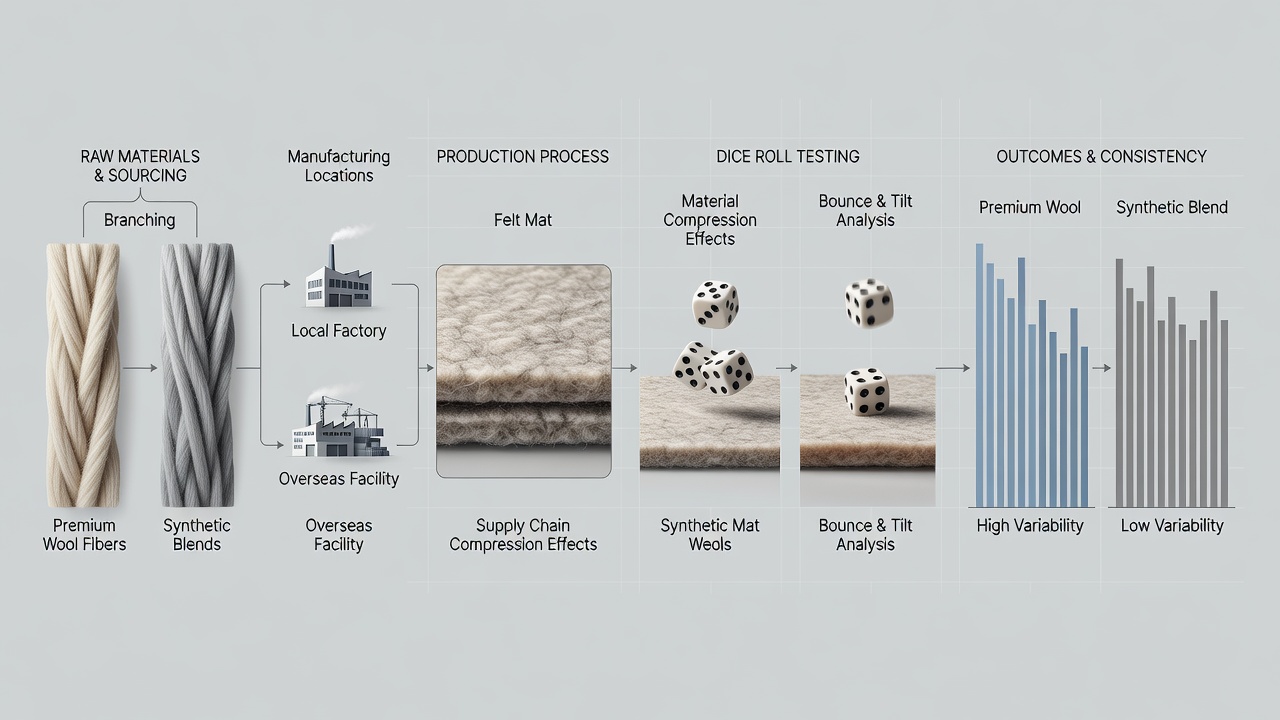
Kit producers have begun documenting batch numbers alongside material certificates to allow downstream quality checks. When tournament organizers receive shipments in June 2026, they compare incoming mat samples against baseline friction readings taken at the point of manufacture. Discrepancies traced back to a change in Chinese polyester feedstock during spring 2025 led several suppliers to adjust their blending ratios, restoring dice roll distributions closer to earlier benchmarks.
Quality Control and Traceability Measures
Forward-thinking companies implement fiber origin tagging systems that follow shipments from shearing stations through dyeing vats to final cutting tables. These digital records enable rapid identification of which production run contributed to a given kit, helping isolate variables when dice performance deviates from expected norms. Government agencies in Canada have published guidelines encouraging such traceability within recreational gaming equipment supply chains, noting that uniform material properties support consistent play conditions across venues. Industry associations similarly recommend periodic surface profilometry scans that quantify roughness averages before mats enter kit packaging.
Variations also arise from finishing treatments applied after weaving. Some facilities apply silicone sprays to reduce pilling while others use enzyme washes that preserve natural fiber grip. The resulting surface energy differences directly affect how much spin dice retain after initial contact, influencing whether they favor certain numbers in prolonged sessions. Equipment certification reports list these treatment types as mandatory disclosures for tournament-grade products.
Conclusion
Supply chain decisions made at the fiber sourcing and processing stages create measurable differences in felt mat characteristics that propagate into dice roll statistics within integrated poker kits. Traceability protocols now allow manufacturers and regulators to connect specific production variables to performance outcomes, supporting more predictable equipment specifications. Continued monitoring of regional material flows and finishing techniques will determine how future kit batches maintain roll consistency across global distribution networks.